
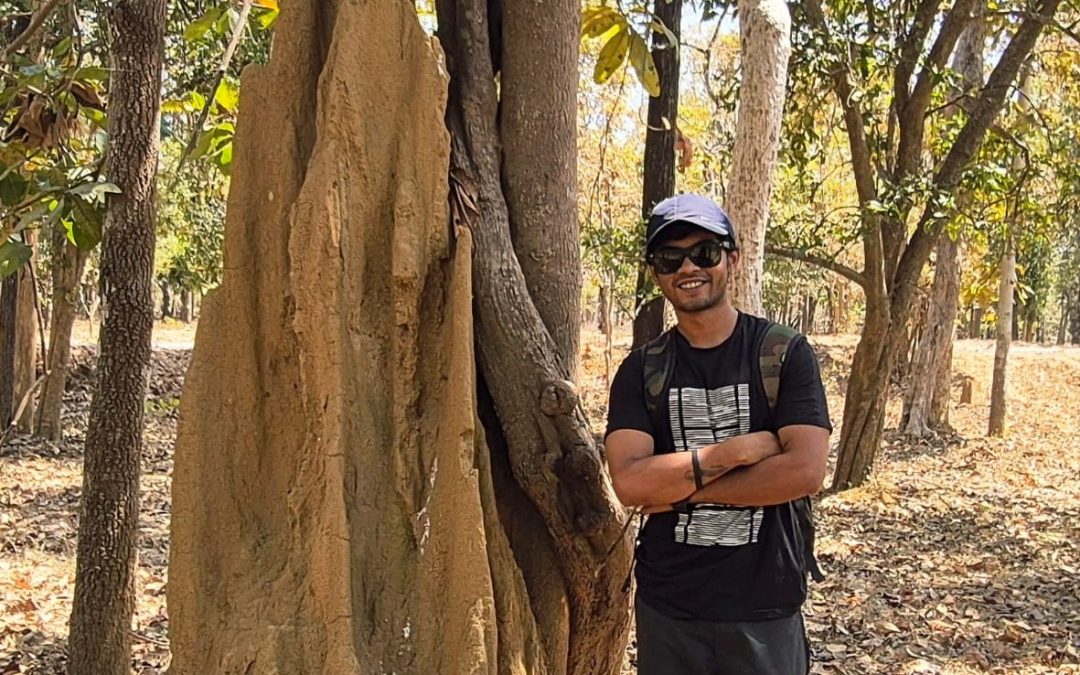
Currently coordinating our partner Tiger Research and Conservation Trust’s (TRACT) work with local communities in Tadoba and NNTR, Anit speaks to us about his conservation journey and his field learnings which have helped him appreciate the knowledge and experience of local community, essential for building lasting coexistence between people and wildlife.
- Tell us more about yourself and what got you interested in working for the environment.
I’ve been interested in wildlife since childhood, often watching nature documentaries after school and wondering what it would be like to work towards protecting the natural world. During my Bachelor’s degree, studying Zoology deepened my interest in wildlife and biodiversity conservation. My journey in this field began with my dissertation, where I studied the ecology and behaviour of canids in the southern Western Ghats of Maharashtra. I later worked as a Project Officer at Bandhavgarh Tiger Reserve, focusing on human-wildlife conflict and engaging with local stakeholders.
- How does a typical day unfold for you? Tell us a bit about your daily tasks and conservation work.
My days usually involve fieldwork, speaking with local communities, understanding the challenges they face, and exploring ways to reduce conflict and encourage people and wildlife to coexist. Every day brings a new situation and something different to learn.
The TRACT team has been working with local communities living around tiger reserves to select and train a team of volunteers, known as Tiger Ambassadors, to become first responders in during conflict situations. The team also undertakes conflict mitigation awareness sessions and discussions with the community. Furthermore, water sources near the buffer villages are being monitored and check dams are being prepared wherever necessary, as scarcity of water is known to be one of the drivers of human-wildlife conflict.
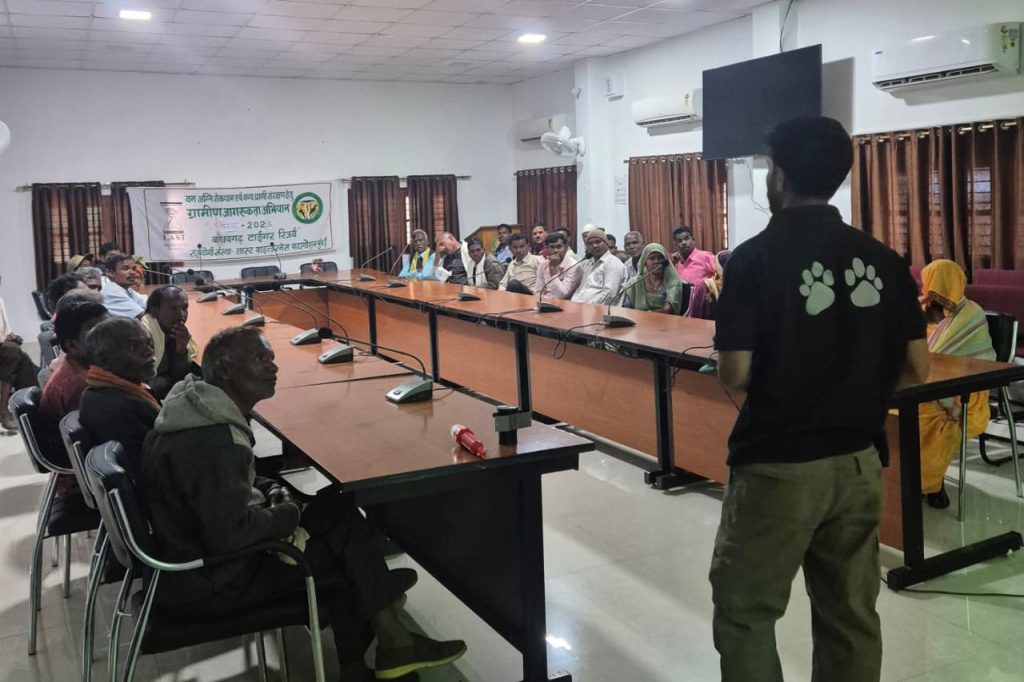
Anit undertaking a discussion with the local community
- What do you love about your current job ?
What I enjoy most about my work is being able to contribute, in my own way, to protecting our planet and its beautiful forests. I also value the opportunity to interact with local communities and learn how they live alongside wildlife, including the challenges they experience. Working in Central India, in a tiger landscape, has been a dream come true for me.
- Could you share a key learning or experience from the field?
Throughout my work in wildlife conservation, I’ve learned a lot from the people living in the different landscapes I’ve worked in. One lesson that has stayed with me is that local communities often have generations of knowledge about using forest resources responsibly and living in balance with nature. We may learn about conservation through books, but these communities have practiced it as part of their everyday lives. Their knowledge and experience are essential for building lasting coexistence between people and wildlife.

- Do you feel optimistic about the future of the natural environment of India? Have you experienced a positive change regarding conservation in your area?
Yes, I feel optimistic about the future of wildlife conservation in India, and I believe the efforts being made are creating a positive impact. In the different landscapes where I’ve worked, I’ve seen local communities become more tolerant of wildlife through conservation initiatives and awareness efforts. This growing understanding can play an important role in protecting wildlife and preserving forests for the future.