
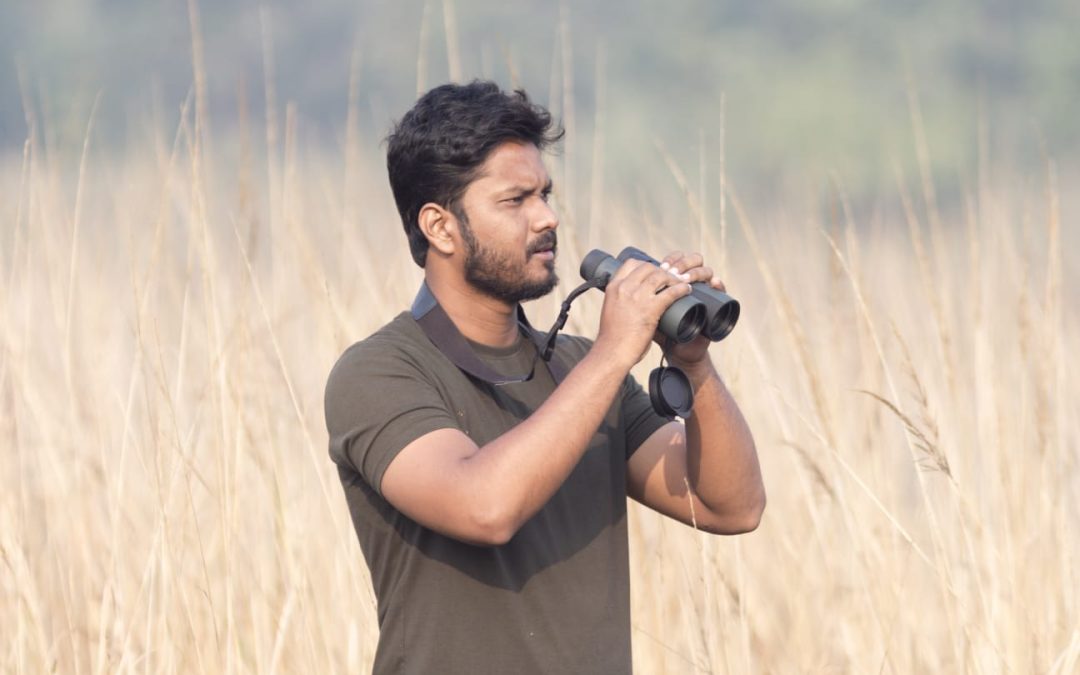
Shashank speaks to us about his childhood inspiration which shaped his conservation journey, why he feels India’s conservation journey is moving in the right direction and what makes him think that listening is as important as teaching during nature education initiatives.
- Tell us more about yourself and what got you interested in working for the environment.
My name is Shashank Ladekar, and I work as an Education Officer with the Bombay Natural History Society (BNHS) in the Tadoba–Andhari Tiger Reserve landscape under the Satpuda Landscape Tiger Partnership (SLTP). My journey in conservation began at a very young age, when I was in 6th standard. I was deeply inspired by a chapter on Dr. Salim Ali in my Marathi textbook, which sparked a lifelong curiosity and respect for birds and wildlife.
Motivated by this early inspiration, I began participating in snake and small mammal rescue activities, which helped me understand wildlife closely and responsibly. Over the years, I gained valuable experience working with and learning from several conservation organisations, including Gondia Nisarg Mandal, SEWA, TRACT, and through wetland research-based fieldwork with the University of Minnesota, I was also associated with Sanctuary Asia’s “Mud on Boots” project, focusing on wetland conservation and the protection of the Sarus Crane, and with the Wildlife Conservation Trust (WCT) as part of the Regeneration of Biodiversity Committee in villages supporting Sarus Crane habitats.
Later, getting the opportunity to work with one of India’s leading environmental organisations, BNHS, made me realise how deeply my childhood inspiration had shaped my path. Today, conservation education has become my passion. I strongly believe that childhood is the most important stage to plant the seeds of conservation, as young minds are curious, sensitive, and open to learning. By working closely with children and local communities, I aim to build awareness and empathy that will help secure the future of India’s wildlife and promote peaceful coexistence between people and nature.
- How does a typical day unfold for you ? Tell us a bit about your daily tasks and conservation work.
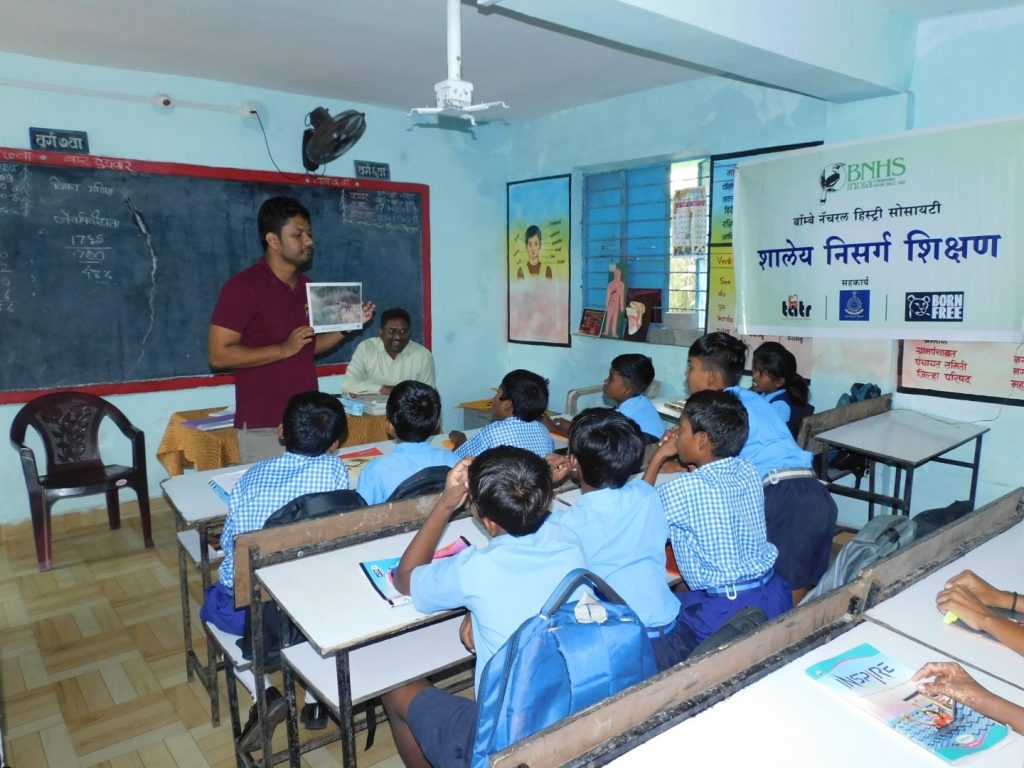
A typical day revolves around translating conservation goals into meaningful action on the ground. I plan and lead school-based environmental awareness programmes, nature games, and highly interactive sessions across buffer villages of the Tadoba landscape. Under BNHS’s intensive conservation education initiative, we are reaching 106 buffer schools, following a strict and well-structured annual schedule that ensures five visits to each school every year. Each visit introduces new, innovative learning tools and activities, allowing students to engage deeply and build lasting understanding over time rather than through one-time interactions.
My work involves close coordination with teachers, forest department staff, and local communities, developing context-specific educational materials, and documenting field-level impact. A significant part of my time is spent in the field, directly engaging with students and villagers on critical issues such as human–wildlife conflict, biodiversity conservation, and coexistence ethics. Through repeated engagement and hands-on learning, the programme aims to shape attitudes, influence behaviour, and nurture a generation that values and actively supports wildlife conservation.

Shashank delivering a school awareness session
- What do you love about your current job?
What I love most about my job is working directly with children and local communities. Seeing curiosity ignite in young minds and watching children develop empathy and respect for wildlife is deeply fulfilling. Every programme feels meaningful because it contributes to building a conservation-conscious future generation.
From childhood, I have been a great follower of Dr. Salim Ali, whose work and vision inspired me deeply. Knowing that he was associated with BNHS made it my dream organisation to work with. Joining BNHS and contributing to conservation education feels like the fulfilment of a childhood dream, and it motivates me every day to carry forward that legacy by inspiring the next generation to care for India’s natural heritage.
- Could you share a key learning or experience from the field ?
One important learning from the field is that listening is as important as teaching. Many community members living in the Tadoba landscape possess deep traditional ecological knowledge and demonstrate remarkable resilience. Despite facing intense human–wildlife conflict, these communities continue to live alongside wildlife and set a powerful global example of coexistence.
Working closely with them has taught me to deeply respect their experiences and realities. When conservation efforts acknowledge their challenges and value their knowledge, people respond positively and become genuine, long-term partners in conservation
- Do you feel optimistic about the future of the natural environment of India ? Have you experienced a positive change regarding conservation in your area ?
Yes, I am optimistic about the future of India’s natural environment. Through my work in conservation education, I have witnessed a visible shift in awareness and attitudes among students, teachers, and local communities. Children who were once unaware of wildlife issues are now able to understand concepts like coexistence, biodiversity, and ethical behaviour towards nature, and many carry these messages back to their families.
In the Tadoba landscape, I have observed communities becoming more informed and responsible despite living in a high human–wildlife conflict zone. People are gradually adopting safer practices, showing greater respect for wildlife, and actively participating in awareness programmes. Regular engagement through school-based initiatives and community interactions has helped build trust and understanding over time.
These positive changes, though gradual, give me strong hope. They show that consistent education, community involvement, and long-term conservation efforts can bring meaningful change. This makes me confident that India’s conservation journey is moving in the right direction, driven by informed communities and a more environmentally conscious younger generation.
By working closely with children and local communities, Shashank’s work aims to build awareness and empathy that will help secure the future of India’s wildlife and promote peaceful coexistence between people and nature.
Wishing him the best.